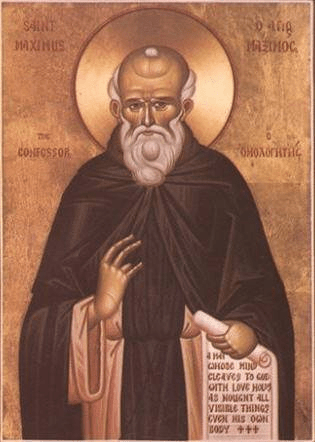
Saint Maximus the Confessor was born in the region of Constantinople, was well educated, and spent some time in government service before becoming a monk, having been a member of the old Byzantine aristocracy and holding the post of Imperial Secretary under Emperor Heraclius. Around 614, he became a monk (later abbot) at the monastery of Chrysopolis. During the Persian invasion of the Empire (614), he fled to Africa. From about 640 on, he became the determined opponent of Monothelitism, the heretical teaching that Jesus Christ had only one will. In this, he followed the example of St. Sophronius of Jerusalem, who was the first to combat this heresy starting in 634. Maximus supported the Orthodoxy of Rome on this matter and is said to have exclaimed: “I have the faith of the Latins, but the language of the Greeks.” He argued for Dyothelitism, the Orthodox teaching that Jesus Christ possessed two wills (one divine and one human), rather than the one will posited by Monothelitism.
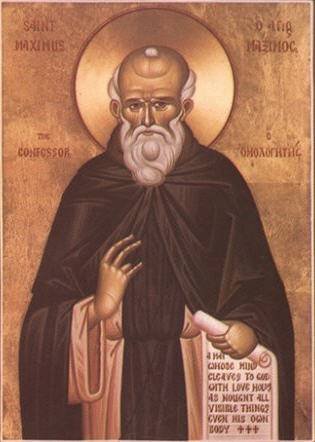
QUOTES
– Do not say that faith in Christ alone can save you, for this is not possible if you do not attain love for Him, which is demonstrated by deeds. As for mere faith: ” The demons also believe and tremble” (James 2:19)
excerpt from the book “Chapters on Love, I. 39-40”
-Theology without practice is the Theology of the demons.
– Just as the remembrance of fire does not warm the body, so faith without love does not cause the soul the illumination of knowledge.
-God, because He is inherently good and apathetic, loves everyone equally as His creations. But He glorifies the virtuous as familiar and willing.
-Bridle your soul’s incensive power with love, quench its desire with self-control, give wings to its intelligence with prayer, and the light of your intellect will never be darkened.
– The purpose of God’s Providence is to unite, by means of right faith and spiritual love, people who have been separated by evil. To this end the Savior also suffered for us, “in order to gather together the children of God who were scattered. ”
(John 11 : 52)
-The person who truly wishes to be healed is he who does not refuse treatment. This treatment consists of the pain and distress brought on by various misfortunes. He who refuses them does not realize what they accomplish in this world or what he will gain from them when he departs this life.
– In all of our deeds God looks at the intention, whether we do it for His sake or for the sake of some other intention.
– All the virtues cooperate with the intellect to produce this intense longing for God, the pure prayer above all. For by soaring toward God through this prayer, the intellect rises above the realm of created things. (from the book 400 texts on love)
-He who loves Christ is bound to imitate Him to the best of his ability.Christ, for example, was always conferring blessings on people; He was long-suffering when they were ungrateful and blasphemed Him; and when they beat Him and put Him to death, He endured it, imputing no evil at all to anyone. These are the three acts that manifest love for one’s neighbor. (Quotes on love, book of “Philokalia”)
Discover more from αlεthεια
Subscribe to get the latest posts sent to your email.


Leave a comment