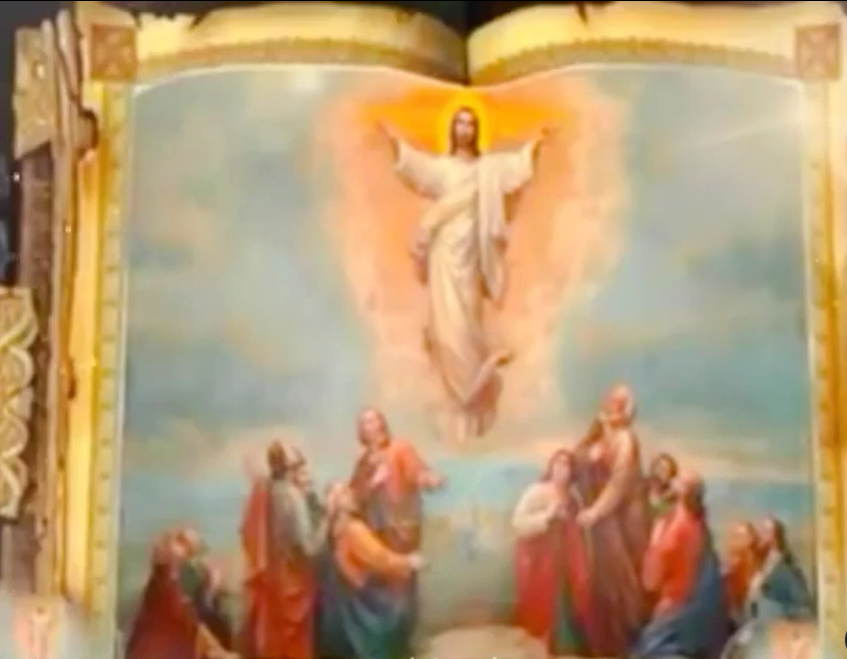
Orthodox Christianity is the one apostolic church that has kept the tradition of the Church Fathers for 2000 years, since the first martyrs, the birth of the Church’s body, and the Apostles’ preaching. It is also focused on the soul’s salvation and trusts that Jesus Christ is the Good Doctor and that the churches are the hospitals that help us come to ourselves and be saved.
In today’s world, people avoid talking about the consequences of sin (so that we don’t upset anyone or because it is considered backward) and they fail to address the existence of all the traps that evil powers have laid for all people, in order to lose their souls. We fail to recognize that there is a war centered in our souls.
Orthodoxy is the art of salvation.
Let’s explore some basics :
Teachings of the Orthodox Church
Rev. Fr. Thomas Fitzgerald
1 .The Orthodox Church throughout the ages has maintained a continuity of faith and love with the apostolic community which was founded by Christ and sustained by the Holy Spirit. Orthodoxy believes that she has preserved and taught the historic Christian Faith, free from error and distortion, from the time of the Apostles. She also believes that there is nothing in the body of her teachings which is contrary to truth or which inhibits real union with God. The air of antiquity and timelessness which often characterizes Eastern Christianity is an expression of her desire to remain loyal to the authentic Christian Faith.
Orthodoxy believes that the Christian Faith and the Church are inseparable. It is impossible to know Christ, to share in the life of the Holy Trinity, or to be considered a Christian, apart from the Church. It is in the Church that the Christian Faith is proclaimed and maintained. It is through the Church that an individual is nurtured in the Faith.
Revelation
God is the source of faith in the Orthodox Church. Orthodoxy believes that God has revealed Himself to us, most especially in the revelation of Jesus Christ, whom we know as the Son of God. This Revelation of God, His love, and His purpose, is constantly made manifest and contemporary in the life of the Church by the power of the Holy Spirit.
The Orthodox Faith does not begin with mankind’s religious speculations, nor with the so-called “proofs” for the existence of God, nor with a human quest for the Divine. The origin of the Orthodox Christian Faith is the Self-disclosure of God. Each day, the Church’s Morning Prayer affirms and reminds us of this by declaring, “God is the Lord and He has revealed Himself to us.” While the inner Being of God always remains unknown and unapproachable, God has manifested Himself to us; and the Church has experienced Him as Father, Son, and Holy Spirit. The Doctrine of the Holy Trinity, which is central to the Orthodox Faith, is not a result of pious speculation, but of the overwhelming experience of God. The doctrine affirms that there is only One God, in whom there are three distinct Persons. In other words, when we encounter the Father, the Son, or the Holy Spirit, we are truly experiencing contact with God. While the Holy Trinity is a mystery which can never be fully comprehended, Orthodoxy believes that we can truly participate in the Trinity through the life of the Church, especially through our celebration of the Eucharist and the Sacraments, as well as the non-sacramental services.
Incarnation of Jesus Christ
Together with the belief in the Holy Trinity, the doctrine of the Incarnation occupies a central position in the teaching of the Orthodox Church. According to Orthodox Faith, Jesus is much more than a pious man or a profound teacher of morality. He is the “Son of God who became the Son of Man.” The doctrine of the Incarnation is an expression of the Church’s experience of Christ. In Him, divinity is united with humanity without the destruction of either reality. Jesus Christ is truly God who shares in the same reality as the Father and the Spirit. Moreover, He is truly man who shares with us all that is human. The Church believes that, as the unique God-man, Jesus Christ has restored humanity to fellowship with God.
By manifesting the Holy Trinity, by teaching the meaning of authentic human life, and by conquering the powers of sin and death through His Resurrection, Christ is the supreme expression of the love of God the Father, for His people, made present in every age and in every place by the Holy Spirit through the life of the Church. The great Fathers of the Church summarized the ministry of Christ in the bold affirmation, “God became what we are so that we may become what He is.”
source : https://www.goarch.org/el/-/teachings-of-the-orthodox-church
We keep the teachings of the Ecumenical Counsils and the Apostolical Canons .
Ecumenical Councils are extraordinary synods of bishops that primarily decide upon dogmatic formulations, especially in the face of heresy. Secondarily, they also issue canonical legislation which governs the administration of the Church. https://orthodoxwiki.org/Ecumenical_Councils
The Nicene Creed
which was formulated at the Councils of Nicaea in 325 and of Constantinople in 381, has been recognized since then as the authoritative expression of the fundamental beliefs of the Orthodox Church. The Creed is often referred to as the “Symbol of Faith.” This description indicates that the Creed is not an analytical statement, but that it points to a reality greater than itself and to which it bears witness. For generations, the Creed has been the criterion of authentic Faith and the basis of Christian education. The Creed is recited at the time of Baptism and during every Divine Liturgy.
The Creed
“I believe in One God, Father Almighty, Maker of heaven and earth and of all things visible and invisible.
And in One Lord, Jesus Christ, the only-begotten Son of God, begotten of the Father before all ages.
Light of Light, true God of true God, begotten, not created, of one essence with the Father, through whom all things were made.
For us and for our salvation, He came down from heaven and was incarnate by the Holy Spirit and the Virgin Mary and became Man.
He was crucified for us under Pontius Pilate, and He suffered and was buried.
On the third day He rose according to the Scriptures.
He ascended into heaven and is seated at the right hand of the Father.
He will come again with glory to judge the living and the dead. His kingdom will have no end.
And in the Holy Spirit, the Lord, Giver of Life, who proceeds from the Father, who together with the Father and the Son is worshipped and glorified, who spoke through the prophets.
In one, holy, catholic, and apostolic Church.
I acknowledge one baptism for the forgiveness of sins.
I expect the resurrection of the dead; and the life of the age to come.
Amen.”
2. We have Orthodox Icons that we venerate, not worship, so that we can have a personal relationship with Saints , or to pray to them and ask for their help or just to seek spiritual comfort. We do not worship these icons, or their material, we only honor the person depicted.
3. we do not interpret the Scriptures ourselves, rather we consult the teachings of the Church Fathers and Saints who were enlightened by the Holy Spirit. We also read the lives of Saints, because they are the teachings of the Bible in practice. Saints are holy and enlightened because they are more susceptible to receiving the grace of God when interpreting the Scriptures, and that is why the Orthodox Christian church relies on them for understanding the word of God.
4. we believe we are not saved through faith alone , but works too, as John Chrysostom said :
“Demons too have faith, but they tremble in the name of God”
More on Saint John Chrysostom here :
5. Worship
Dimensions Of Worship
Worship is an experience which involved the entire Church. When each of us comes together for Worship, we do so as members of a Church which transcends the boundaries of society, of time and of space. Although we gather at a particular moment and at a particular place, our actions reach beyond the parish, into the very Kingdom of God. We worship in the company of both the living and the departed faithful. There are two dimensions to Orthodox Worship which are reflected throughout the many Services of the Church. First, Worship is a manifestation of God’s presence and action amid of His people. It is God who gathers His scattered people together, and it is He who reveals Himself as we enter into His presence. The Worship of the Orthodox Church very vividly expresses the truth that God dwells among His people and that we are created to share in His life. Second, Worship is our corporate response of thanksgiving to the presence of God and a remembrance of His saving actions – especially the Life, Death, and Resurrection of Jesus Christ. Orthodox Worship is centered upon God. He has acted in history, and He continues to act through the Holy Spirit. We are mindful of His actions and we respond to His love with praise and thanksgiving. In so doing we come closer to God. { source : https://www.goarch.org/el/-/worship ]
6. Eucharist (from the Greek εὐχαριστία, or eucharistia, meaning thanksgiving or giving thanks) is a holy mystery (or sacrament) that is celebrated during the Divine Liturgy within the Orthodox Church where the consecrated bread and wine, through the power of the Holy Spirit becomes the Precious Blood and Body of Jesus Christ, that is consumed by prepared Orthodox Christians. Other names for the Eucharist include: the Holy Gifts, Communion, and the Body and Blood of our Lord Jesus Christ Orthodox Christians believe that the Real Presence of God (not merely a sign) is present after the consecration of the Gifts. https://orthodoxwiki.org/Eucharist
7. our goal is the salvation of the soul and theosis, which means to be one with God.
Theosis (“deification,” “divinization”) is the process of a worshiper becoming free of hamartía (“missing the mark”), being united with God, beginning in this life and later consummated in bodily resurrection. For Orthodox Christians, Théōsis (see 2 Pet. 1:4) is salvation. Théōsis assumes that humans from the beginning are made to share in the Life or Nature of the all-Holy Trinity. Therefore, an infant or an adult worshiper is saved from the state of unholiness (hamartía — which is not to be confused with hamártēma “sin”) for participation in the Life (zōé, not simply bíos) of the Trinity — which is everlasting.This is not to be confused with the heretical (apothéōsis) – “Deification in God’s Essence“, which is imparticipable.
Orthodox theology
The statement by St. Athanasius of Alexandria, “The Son of God became man, that we might become god”, [the second g is always lowercase since man can never become a God] indicates the concept beautifully. II Peter 1:4 says that we have become ” . . . partakers of divine nature.” Athanasius amplifies the meaning of this verse when he says theosis is “becoming by grace what God is by nature” (De Incarnatione, I). What would otherwise seem absurd, that fallen, sinful man may become holy as God is holy, has been made possible through Jesus Christ, who is God incarnate. Naturally, the crucial Christian assertion, that God is One, sets an absolute limit on the meaning of theosis – it is not possible for any created being to become, ontologically, God or even another god.
All of humanity is fully restored to the full potential of humanity because the Son of God took to Himself a human nature to be born of a woman, and takes to Himself also the sufferings due to sin (yet is not Himself a sinful man, and is God unchanged in His being). In Christ, the two natures of God and human are not two persons but one; thus, a union is effected in Christ, between all of humanity and God. So, the holy God and sinful humanity are reconciled in principle, in the one sinless man, Jesus Christ. (See Jesus’s prayer as recorded in John 17.) This reconciliation is made actual through the struggle (podvig in Russian) to conform to the image of Christ.
Without the struggle, the praxis, there is no real faith; faith leads to action, without which it is dead. One must unite will, thought and action to God’s will, His thoughts and His actions. A person must fashion his life to be a mirror, a true likeness of God. More than that, since God and humanity are more than a similarity in Christ but rather a true union, Christians’ lives are more than mere imitation and are rather a union with the life of God Himself: so that, the one who is working out salvation, is united with God working within the penitent both to will and to do that which pleases God. Gregory Palamas affirmed the possibility of humanity’s union with God in His energies, while also affirming that because of God’s transcendence and utter otherness, it is impossible for any person or other creature to know or to be united with God’s essence. Yet through faith we can attain phronema, an understanding of the faith of the Church. The journey towards theosis includes many forms of praxis. Living in the community of the church and partaking regularly of the sacraments, and especially the Eucharist, is taken for granted. Also important is cultivating “prayer of the heart”, and prayer that never ceases, as Paul exhorts the Thessalonians (1 and 2). This unceasing prayer of the heart is a dominant theme in the writings of the Fathers, especially in those collected in the Philokalia.
https://orthodoxwiki.org/Theosis
Discover more from αlεthεια
Subscribe to get the latest posts sent to your email.


Leave a comment